
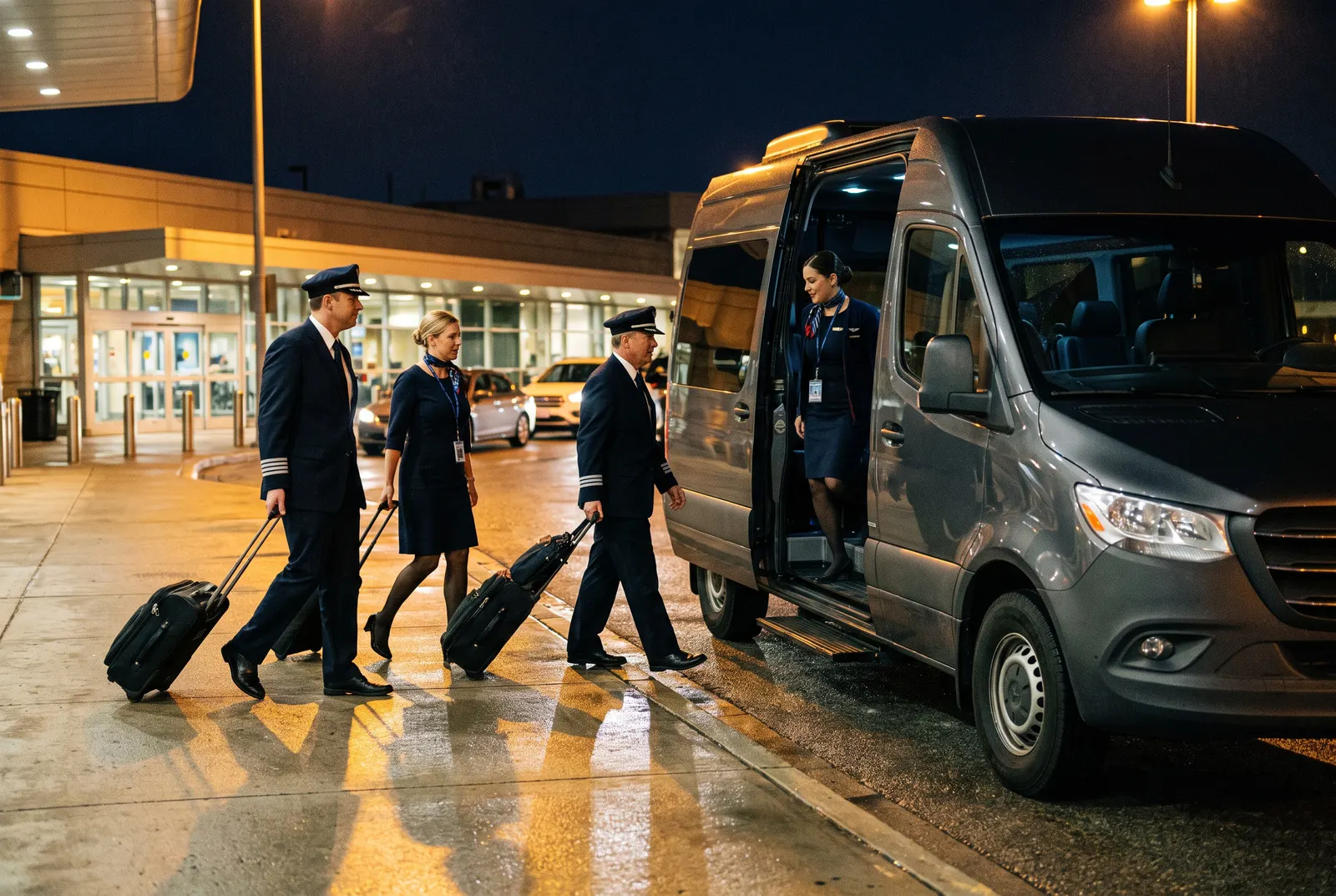
This guide explains how it works from the scheduler's side, what to ask a provider, and where the common problems come from.
What crew transportation covers
Most crew moves fall into a few types:
- Layover runs: airport to crew hotel after the last leg, and hotel back to the airport for the next duty
- Deadhead and repositioning: moving crew between airports, such as Billy Bishop and Pearson, to start a pairing somewhere else
- Home base moves: pickups from residences for early reports or late returns
- Irregular operations: delays, diversions and cancellations that strand a crew somewhere they did not plan to be
Each type has different timing pressure. A layover run is routine until the inbound flight is three hours late. A diversion can mean a crew of five needs a vehicle at a regional airport at 2 a.m.
How a typical booking works
The flow is usually simple:
- The airline or crew scheduling team sends the pairing, flight numbers and crew count to the transport provider.
- The provider assigns a vehicle sized for the crew and their bags.
- Dispatch tracks the inbound flight and adjusts the pickup to the actual arrival time.
- The driver waits at the agreed meeting point and confirms pickup with dispatch.
- The crew is dropped at the hotel, and the return pickup is already booked against the next report time.
Standing schedules help. When the provider has the monthly pairings in advance, they can plan vehicles and drivers ahead and only adjust for changes.
Timing pickups to crew rest
Crew rest is the core reason crew transport has to be exact. Transport Canada sets flight and duty time limits and minimum rest rules for flight crew. Time spent waiting for a ride or sitting in traffic can eat into the rest period, depending on how the operator counts it.
In practice, this means:
- The pickup at the hotel should match the report time, not an approximate window
- A late inbound flight pushes the return pickup later so the crew still gets its required rest
- Dispatch needs to know the operator's rest policy, not just the flight times
Your operations manual and your carrier's interpretation of the rules decide the exact numbers. The transport provider's job is to follow the times your scheduling team sets and to flag anything that would cut into rest.
Flight tracking and irregular operations
Schedules change all the time. A provider that only works off the published time will either leave crews waiting or keep drivers idle.
What good tracking looks like:
- Pickups follow the real arrival, not the scheduled one
- Delays are picked up early so the driver is not sent too soon
- Diversions are re-planned by a dispatcher, including sending a car to a different airport
- Cancellations trigger a call to scheduling to confirm what the crew needs next
This only works with live dispatch at every hour. Irregular operations do not keep office hours, and a voicemail at 3 a.m. is not a plan.
Vehicles and bags
Crews travel with roller bags, flight bags and sometimes extra kit. Size the vehicle for the bags, not just the head count.
- An executive sedan suits one to three crew members with standard bags
- A premium SUV gives more room for a small crew with heavier bags
- An executive Sprinter van suits a full cabin crew and all their luggage in one trip
Sending one van instead of two cars also keeps the crew together and makes timing simpler. For more detail, see our guide on choosing a sedan, SUV or Sprinter van, or browse the Jetline fleet.
Billing and reporting
Crew transport generates a lot of small trips, and finance teams do not want a receipt for each one. Look for:
- Direct billing to the airline or operator
- One consolidated invoice per period
- Trip reports showing crew, times, routes and any changes
- One account manager who knows your operation
A contract or service level agreement can lock in set vehicles, drivers and response times. That gives your crews familiar faces and gives scheduling a fixed process. Our corporate accounts page explains how this works with Jetline.
Questions to ask a crew transport provider
Before you sign, ask:
- Is dispatch staffed 24/7/365, and who answers at night
- How do you track flights, and who re-plans a pickup after a diversion
- Which airports do you serve, including regional ones
- Can drivers meet crews planeside where the FBO allows it
- How do you handle crew rest timing when a flight runs late
- What do trip reports include, and how often do we get them
The answers tell you whether the provider has run crew work before or is learning on your crews.
Crew transportation with Jetline
Jetline has moved airline crews at Billy Bishop Toronto City Airport for more than six years. We also serve Toronto Pearson and regional airports across Ontario. Our dispatch line is open 24/7/365, every pickup follows the real arrival, and our dispatchers re-plan delays, diversions and cancellations at any hour.
Read more about our airline crew transportation service, or contact us to set up crew moves. You can also call 289-968-0199 or email booking@jetlinetransport.ca.
Frequently asked questions
How far in advance should crew transport be booked?
Standing schedules work best, so share monthly pairings as soon as they are set. Individual changes can still be handled the same day through dispatch. Quotes for new routes usually come back within hours.
What happens if a crew's flight is diverted?
A dispatcher re-plans the pickup to the new airport and confirms the details with your scheduling team. The crew should have a vehicle waiting where they actually land. This is why 24/7 live dispatch matters for crew work.
Can one vehicle carry a full crew and their bags?
Usually yes, with an executive Sprinter van. It holds a full cabin crew and their roller bags and flight bags in one trip. For smaller crews, a sedan or SUV is often enough.